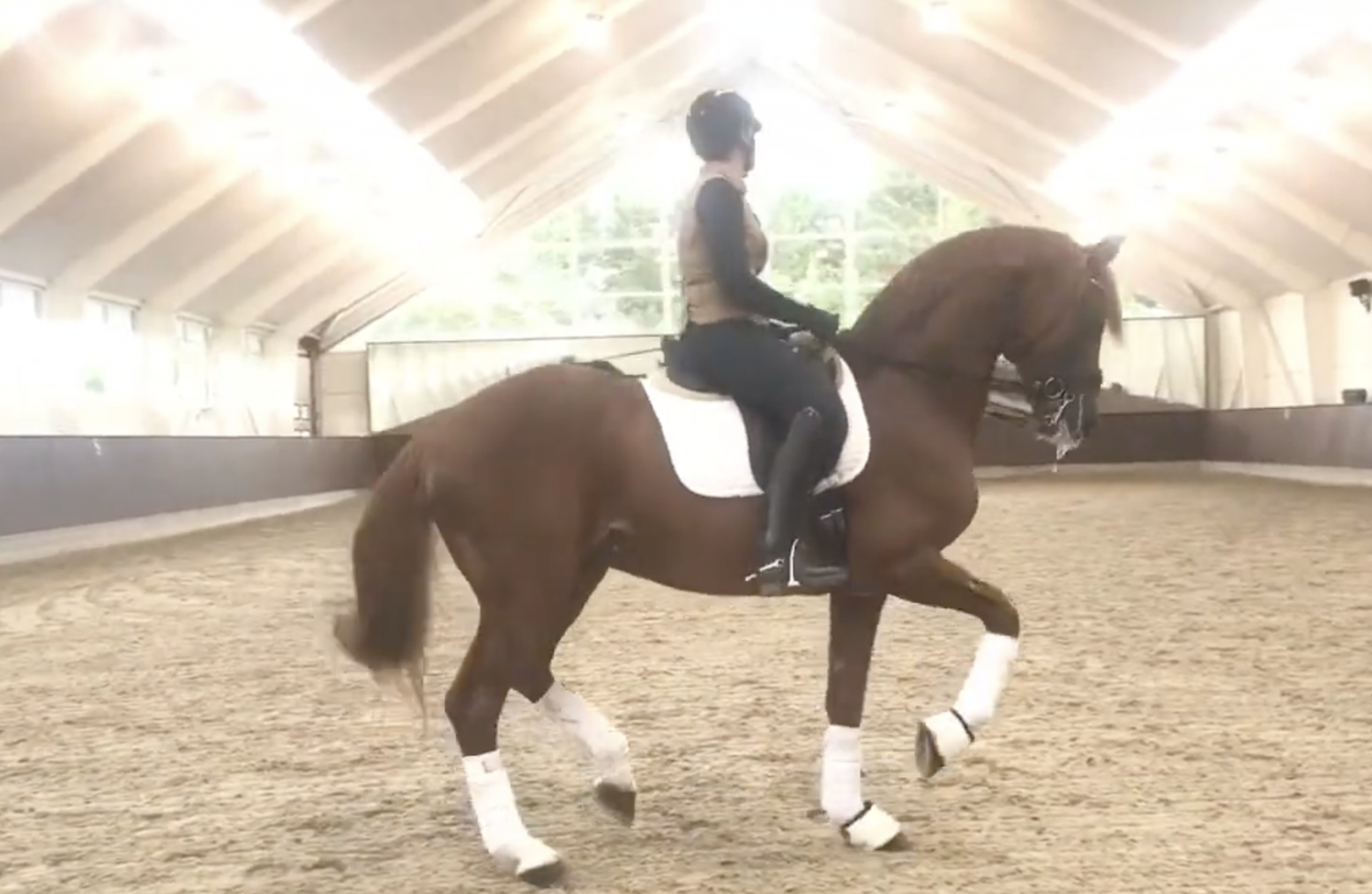
The rider in this scene is dressed in a more classic yet still functional dressage training outfit. She wears a black riding helmet, with her hair neatly tied back. Notable is the combination of a dark long-sleeve top and a light brown or beige vest, giving the overall look a slightly more elegant, almost competition-like appearance. She pairs this with dark, close-fitting riding breeches and tall black riding boots. Her hands hold the reins relatively short and steady, creating a continuous and rather firm connection to the horse. Her upper body is mostly upright but shows moments of slight backward leaning, especially during phases of increased collection or elevated movement. Her seat appears stable but clearly active and influential, not merely following the motion. Her gaze is directed forward, occasionally shifting toward the horse, indicating ongoing control and correction. Overall, she appears focused, controlling, and consistently applying influence.
The horse is a strong, well-muscled chestnut with a full mane and tail. It is equipped with white bandages on all four legs and a light-colored saddle pad beneath the saddle. The bridle with bit is clearly visible in the mouth, with some foam present, indicating steady and somewhat intense contact. The neck is carried very high and strongly arched, showing clear tension along the topline. The head is positioned close to vertical or slightly behind it. The front legs display expressive, elevated movement with significant action, while the hind legs step actively under the body to support the collected frame. The musculature, especially in the neck, shoulders, and hindquarters, is well developed. At the same time, there are clear signs of tension, such as tail movement, mouth activity, and the overall compact, compressed posture.
The way the horse is ridden appears very intense, demanding, and continuously influenced. The horse is required to work constantly, as it is kept in a highly collected, tight, and compressed frame with very limited opportunity for forward stretch or true relaxation. The rider asks for a consistent outline, maintaining a high, rounded neck and a steady, sometimes firm contact. Due to the short reins, steady hand position, and slightly backward-influencing seat, the horse appears to be kept under ongoing pressure and tension. The movement is powerful, energetic, and expressive, but not free or loose—instead, it is controlled and somewhat restricted. The level of demand is high, as the horse must generate significant power from the hindquarters while maintaining a confined posture. Overall, the riding style appears strongly performance-oriented, prioritizing control, expression, and collection. Relaxation, stretch, and natural freedom of movement are clearly secondary, while intensity and continuous influence dominate the picture.
Leave a Reply